

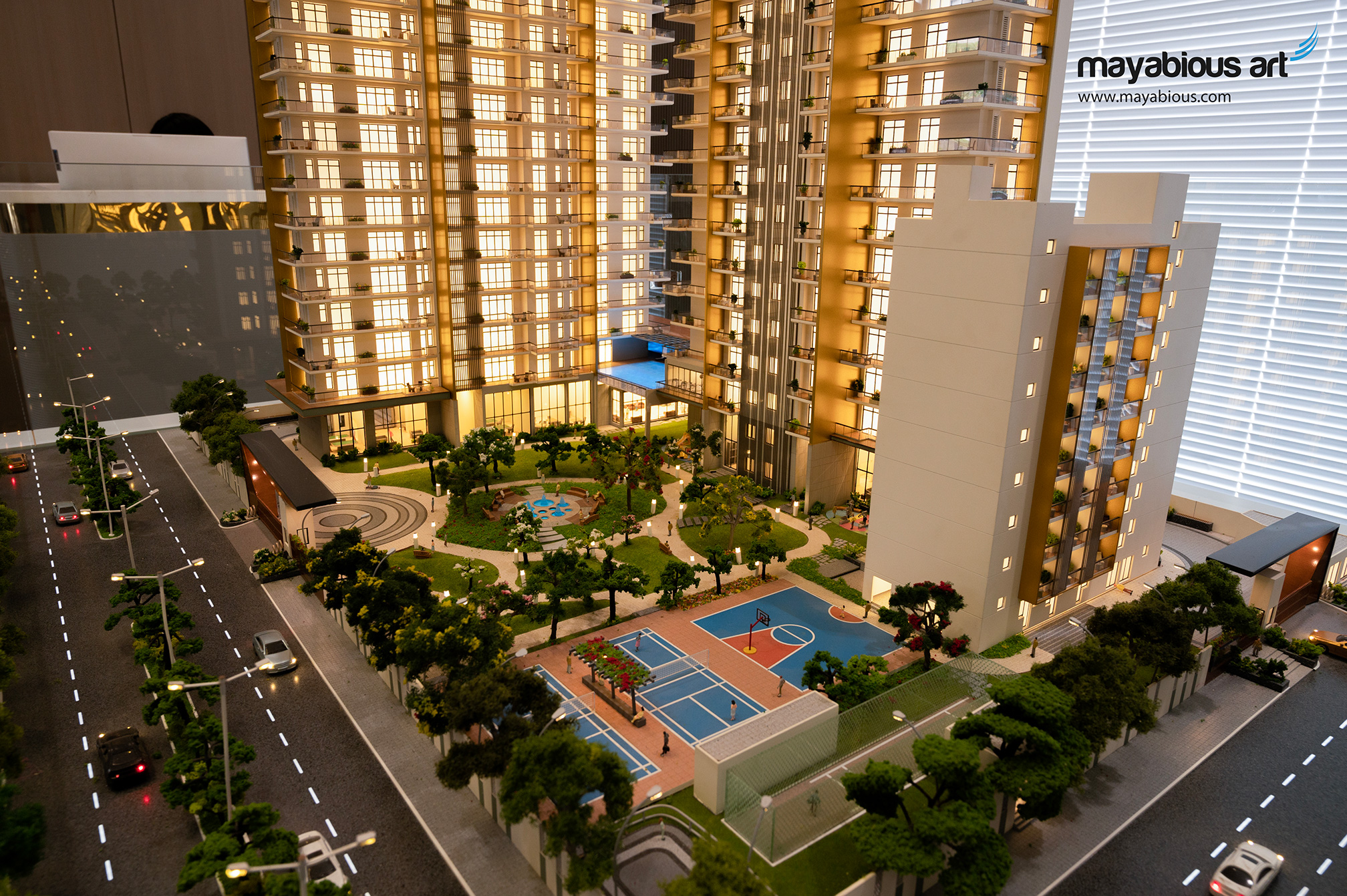
There’s a distinct shift that occurs when someone enters a well-designed real estate experience center.
Before the brochures are opened or the pitch begins, the meticulously crafted architectural miniature model captures attention. Not just a display, but a story waiting to be experienced.
In that instant, real estate marketing shifts from being informational to emotional.
With 3D renders, AR/VR, and immersive walkthroughs dominating the field, it’s easy to think physical models are less important.
But that’s not the case.
Scale models provide something digital tools cannot fully replicate: a real, sensory connection. Buyers don’t just look at a project; they feel its size, depth, and presence. Seeing a project from multiple angles at the same time creates clarity of orientation of the different spaces that even the best screens struggle to provide.
This is why architectural model makers remain vital in high-end real estate marketing.
The Psychology Behind Architectural Miniature Models
A homebuyer’s journey is rarely just logical; it’s often emotional.
A well-crafted architectural miniature model enables the customer to view the project both in terms of its functionalities and the experience of living in it would offer.
It bridges imagination and reality.
Buyers can immediately grasp spatial relationships, open areas, landscaping, and overall planning. This clarity builds trust, and trust speeds up decisions.
Often, the model becomes the first point of belief in the project.
From Visualization to Brand Positioning
Here’s where things become more strategic.
In premium and luxury markets, everything influences brand perception, including how a project is shown.
A highly detailed scale model signals precision, intent, and quality. It reflects how seriously a developer takes design, planning, and execution.
Conversely, a poorly made model can weaken even a strong project.
This is why architectural scale models are not just presentation tools; they serve as branding assets.
They communicate value before any conversation begins.
Creating a Sensory Experience, Not Just a Model
Not all models create an impact. The difference is in their craftsmanship.
Lighting, material finishes, landscaping details, and human elements aren’t just extras. They shape how the project is viewed.
At Mayabious, scale models are seen as tools for experiential storytelling. The focus is on capturing how a space is meant to be enjoyed, not merely replicating structures. Therefore, we integrate scale models with technologies such as IoT and hydraulic systems to present customers with a vision of their future lifestyle.
Every detail is designed to evoke response, generate aspiration, and drive curiosity.
In high-end real estate, people don’t just buy what they see.
They buy what they feel.
The Role of Archotectural Scale Models in Modern Real Estate Marketing
Today, the best real estate marketing strategies are layered.
Digital tools attract attention. But physical experiences turn interest into intent.
Scale models occupy the sweet spot between both.
They anchor experience centers, improve sales presentations, and provide a focal point for engagement. They slow the buyer down, in a good way, letting them absorb, reflect, and connect.
In a fast-paced decision-making environment, that pause can make the difference between hesitation and commitment.
Where It All Comes Together
In the end, high-end real estate is not just about buildings; it is about belief. Belief in the design, in the developer, and in the future being promised. This is where architectural model makers step beyond craftsmanship and into influence, shaping how that belief is formed and reinforced. They are not simply building scaled structures; they are creating a tangible connection between vision and reality. When executed with precision and intent, a architectural scale model moves beyond being a marketing tool and becomes a powerful means of clarity, where a project is no longer just seen but understood, trusted, and ultimately felt as something real.
For a 3D model-making agency in India, this role goes far beyond execution; it is about interpreting a project’s intent and translating it into an experience that buyers can instantly connect with.