

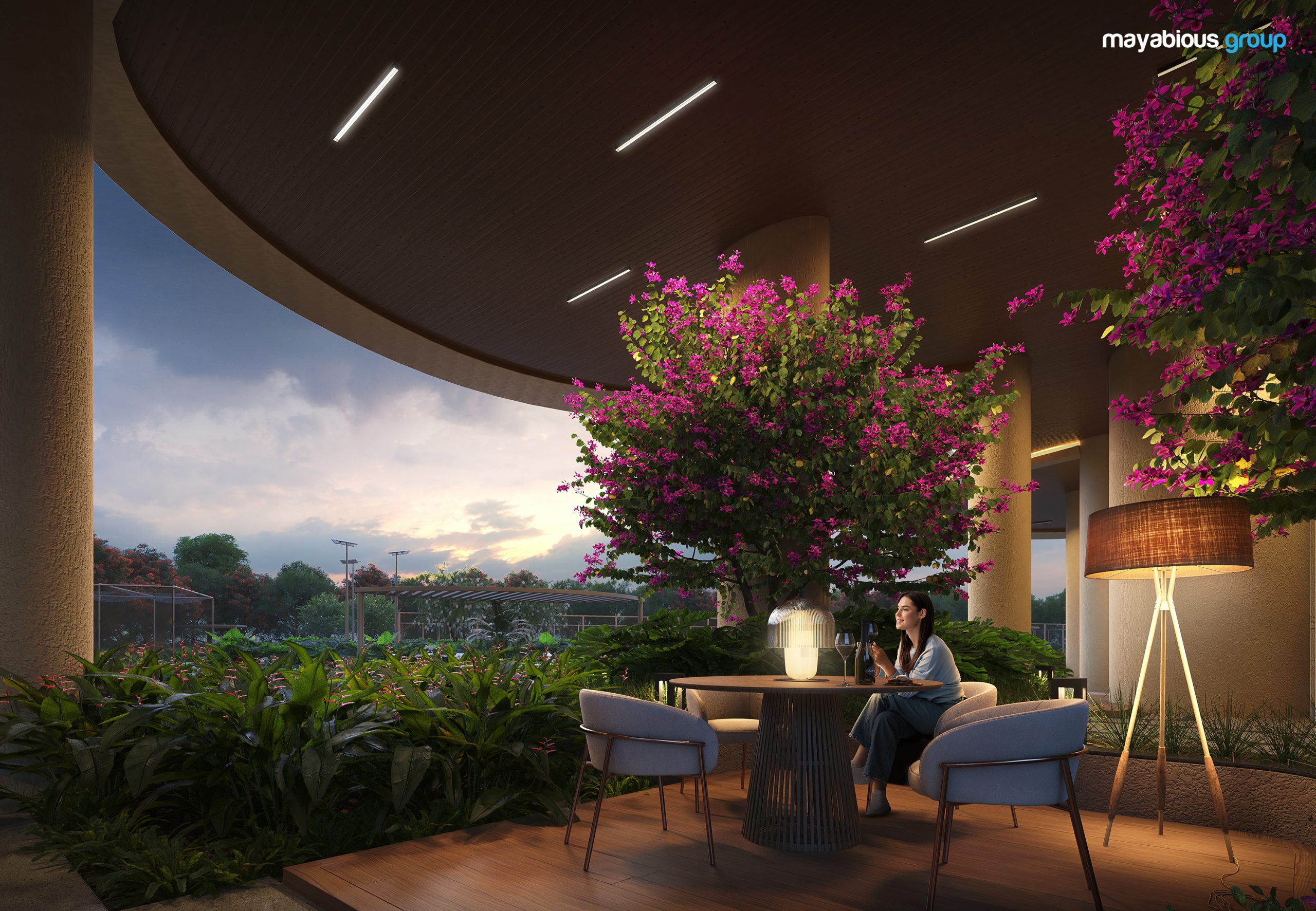
The 3D rendering industry in 2026 goes beyond creating photorealistic visuals. It focuses on building immersive experiences, speeding up workflows with AI, and telling emotionally engaging stories that resonate with audiences.
Rendering technologies are rapidly evolving across various fields, from architecture and real estate to gaming and product visualization. Now, clients expect interactive environments, cinematic quality, and quick delivery all at once.
One of the biggest changes in 2026 is the shift from sterile, overly polished renders to emotional and cinematic storytelling. Renders now incorporate realistic lifestyle elements like soft lighting, natural clutter, weather effects, and cues for human interaction, rather than empty spaces with perfect symmetry.
Today’s audiences connect better with spaces that feel real instead of technically perfect. Developers and architects are using warm atmospheric lighting, natural imperfections, story-driven composition, and real-life environmental details
This trend is especially strong in luxury real estate marketing, hospitality projects, and interior visualization, as buyers emotionally connect with believable environments.
The focus has shifted from “showing a building” to “selling a lifestyle.”
AI is becoming a key part of rendering pipelines, not as a replacement for artists but as a productivity booster.
In 2026, AI tools will help studios:
These advancements significantly cut production time while allowing artists to focus on creativity, storytelling, and design details. Many architecture firms are also trying out AI-based sketch-to-render workflows that turn conceptual ideas into polished visuals within minutes.
The future of rendering is developing into a hybrid workflow where AI manages repetitive tasks while human artists drive creative direction.
The difference between offline rendering and real-time visualization is shrinking fast. Technologies powered by Unreal Engine 5, GPU acceleration, and advanced ray tracing are producing cinematic-quality visuals instantly.
Clients now expect: Instant walkthroughs, real-time design changes, interactive presentations, live material editing, web-based visualization experiences
Real-time rendering is transforming industries such as real estate marketing, Urban planning, Automotive visualization, and AR/VR experiences
NVIDIA’s latest innovations are advancing real-time photorealism with improved path-tracing optimization and better VRAM efficiency.
In 2026, speed and interactivity are as important as visual quality.
Static images are not enough for modern presentations anymore. Immersive VR walkthroughs and digital twin environments are becoming essential in 3D rendering strategies.
Developers and visualization studios are now creating:
This trend is especially useful for: Pre-construction property sales, remote client presentations, international real estate marketing, and infrastructure visualization
Digital twin technology helps clients understand scale, lighting, spatial flow, and user experience before physical construction starts.
As immersive technology becomes more accessible, VR-enabled rendering is quickly shifting from a luxury feature to an industry standard.
Social media platforms are changing how content is consumed. In 2026, short-form rendering videos are outperforming static visuals on platforms like Instagram, LinkedIn, and YouTube Shorts.
Brands are now focusing on 15–30 second render clips, vertical walkthroughs, day-to-night transitions, fast cinematic cuts, and social-media-optimized animations
These engaging visuals are helping Real estate developers generate leads, architects boost digital engagement, and brands create immersive storytelling campaigns
Real-time engines are also speeding up video production and making it more scalable than traditional rendering methods.
In many ways, 3D rendering is evolving into both a content marketing tool and a visualization solution.
Immersion, AI-driven workflows, real-time visualization, and cinematic storytelling influence the future of 3D rendering in 2026. The industry is moving beyond static visuals to interactive experiences that help brands communicate ideas faster and more effectively.
As client expectations keep changing, businesses need more than just photorealistic renders. They require strategic visual storytelling that blends technology, creativity, and market insight.
At Mayabious Group, we combine advanced visualization technology, immersive storytelling, and architectural precision to create impactful digital experiences for real estate, architecture, and infrastructure brands. As a top 3D animation studio in India, we specialize in high-end 3D rendering, architectural walkthroughs, AR/VR solutions, and real-time visualization designed to elevate how projects are presented and experienced in today’s competitive market.