

In today’s competitive market, products and services alone cannot create a lasting impression. Brands that truly stand out position themselves clearly in the minds of their audience. Brand positioning is not only about visibility; it is also about perception, trust, and emotional connection.
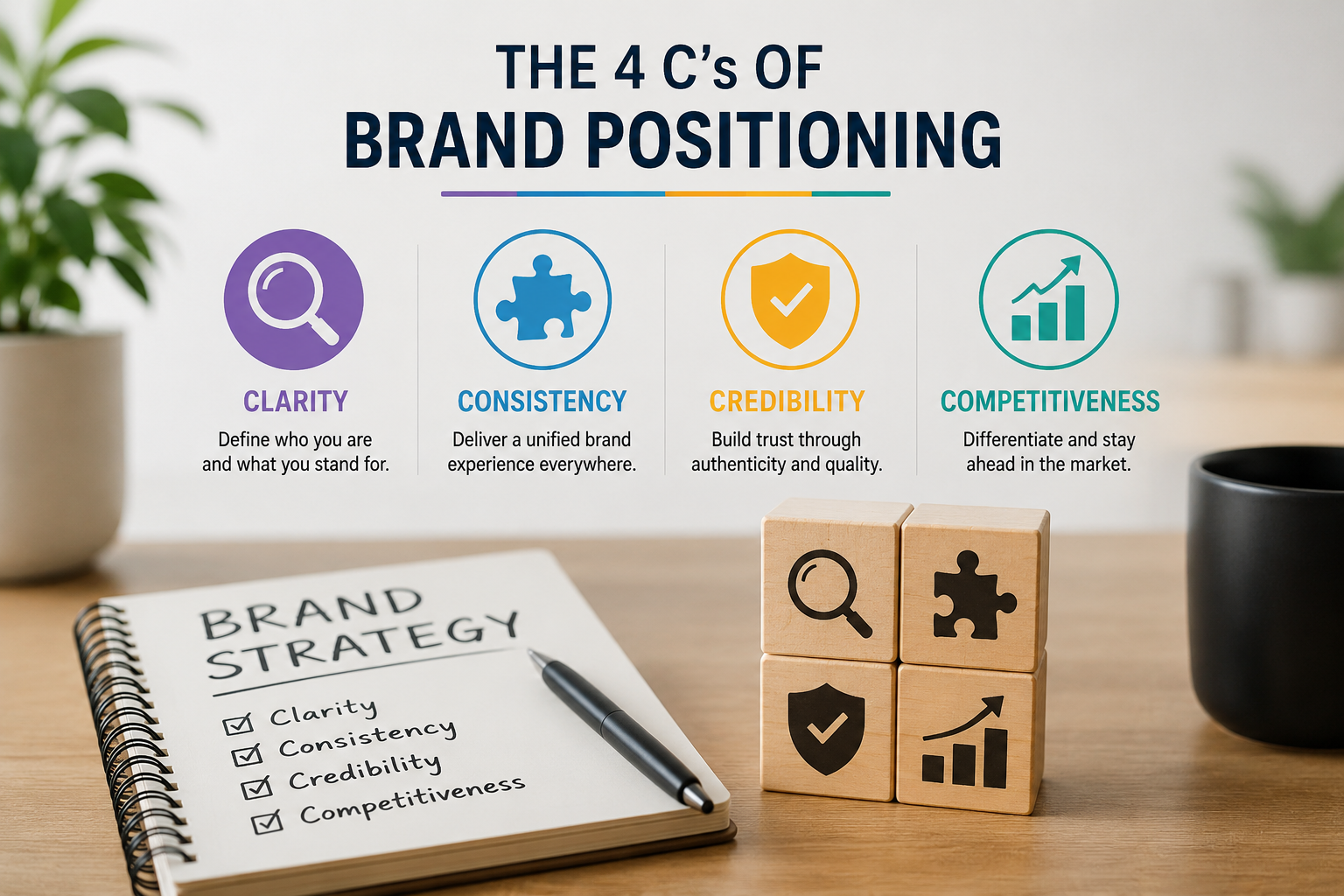
Whether in real estate, architecture, technology, or lifestyle branding, strong positioning helps businesses communicate who they are, what they stand for, and why they matter. One of the best ways to understand this is through the framework of the 4 C’s of Brand Positioning: Clarity, Consistency, Credibility, and Competitiveness.
These four pillars shape how audiences experience a brand and determine whether a company is memorable or forgettable.
The first and most crucial element of brand positioning is clarity. A brand must clearly communicate its purpose, values, offerings, and identity. If audiences find it hard to understand what a business represents, the brand message becomes unclear.
Clarity goes beyond logos and taglines. It shines through visual identity, communication style, website experience, marketing campaigns, and customer interactions. Strong brands simplify their message rather than overwhelm audiences with too many options.
For instance, luxury real estate brands often focus on exclusivity, sophistication, and lifestyle. Technology brands may highlight innovation and efficiency. Companies focused on sustainability usually emphasize responsibility and long-term impact.
The clearer the positioning, the easier it is for audiences to connect emotionally with the brand.
A brand cannot position itself effectively if its communication changes frequently. Consistency builds familiarity, which in turn builds trust.
From social media and brochures to presentations and digital campaigns, every touchpoint should feel connected. The tone of voice, visual style, messaging, and customer experience must match across platforms.
When brands stay consistent, audiences start to associate specific emotions and values with them. Consider globally recognized companies; their communication style remains identifiable, no matter the medium.
In fields like architecture and real estate, consistency is critical since buyers evaluate credibility based on presentation quality. A top-notch project with inconsistent branding can quickly lose perceived value.
This is where strategic branding and visual communication become vital. High-quality 3D visualization, cinematic walkthroughs, branded materials, and immersive digital experiences help create a seamless brand perception across all channels.
Brand positioning is not just about making claims; it is about proving them.
Credibility builds when a brand consistently delivers on its promises. Today’s audiences are informed and research-driven. They seek authenticity, proof of expertise, industry presence, client experience, and overall professionalism before choosing to engage with a company.
Visual storytelling also plays a big role in credibility. Well-designed presentations, realistic architectural renders, detailed walkthroughs, and polished marketing materials instill confidence in the audience.
In sectors like real estate and architecture, buyers often explore projects digitally before visiting them in person. This means that how a project is presented directly impacts trust and purchase decisions.
Companies that invest in high-quality branding and immersive experiences naturally position themselves as industry leaders. Combining creativity, strategy, and technology enhances credibility in today’s digital-first market.
Regardless of a business’s strength, it still needs to stand out. Competitiveness in brand positioning requires identifying what makes a brand unique and ensuring that the uniqueness is clear to the audience.
This uniqueness might stem from innovation, customer experience, sustainability, storytelling, design quality, or technological advances. Brands that do not differentiate often become interchangeable in customers’ minds.
Today, consumers gravitate towards brands that provide experiences instead of merely selling products. Interactive presentations, AR/VR experiences, cinematic storytelling, and emotional campaigns are changing how businesses position themselves in competitive markets.
Progressive companies are increasingly merging design, technology, and storytelling to foster stronger emotional connections. This trend is redefining how brands capture attention and maintain long-term relevance.
The 4 C’s of Brand Positioning—Clarity, Consistency, Credibility, and Competitiveness- form the foundation of a strong and memorable brand. Businesses that effectively integrate these four elements are better able to build trust, connect with audiences, and create lasting market value.
In an era where perception drives decisions faster than ever, strategic branding is essential, not optional.
As industries evolve in the digital space, companies that blend storytelling, a strong visual identity, and innovative communication strategies will shape the future of brand positioning. By leveraging expertise in branding, visualization, architectural storytelling, and digital experiences, Mayabious Group, a top martech agency in India, helps businesses turn ideas into impactful brand experiences that create a lasting impression.